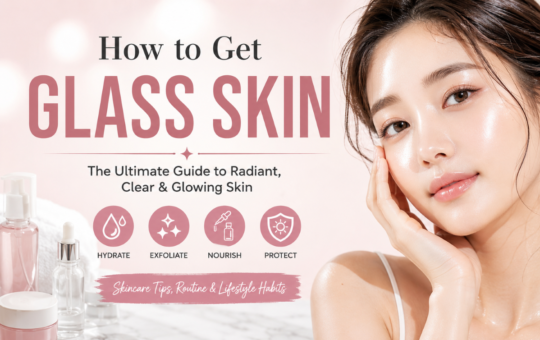
Glass skin is a popular skincare trend that focuses on achieving a smooth, hydrated, and naturally glowing complexion. The term describes skin that looks fresh, healthy, and almost glass-like because of its soft texture and light-reflecting appearance.
You may have seen this skincare trend in Korean beauty routines or on social media. Many people love the look because it gives the skin a fresh and dewy finish without requiring heavy makeup.
However, achieving glass skin does not mean you need expensive skincare products or a complicated routine. Healthy-looking skin starts with simple habits, suitable products, and consistent care.
If you are new to skincare, building a glass skin routine may seem confusing. There are cleansers, toners, serums, moisturizers, and many other products to choose from. Knowing which products you actually need can make the process much easier.
In this beginner-friendly guide, you will learn what glass skin means, how to create a simple skincare routine, which ingredients to consider, and how to maintain a healthy-looking glow.
What Is Glass Skin?
Glass skin is a skincare term commonly associated with Korean beauty. It describes skin that looks smooth, hydrated, and radiant, with a naturally dewy appearance.
The goal is not to make your skin look completely poreless or perfectly flawless. Natural skin has pores, texture, and occasional blemishes. Glass skin is more about maintaining comfortable, well-hydrated skin that reflects light evenly.
A glass skin routine usually focuses on three important things: gentle cleansing, hydration, and protecting the skin from environmental damage.
Some people use several skincare layers to achieve a dewy appearance. However, beginners do not need to follow a complicated routine.
A simple routine with a cleanser, moisturizer, and sunscreen can provide a good foundation. You can add other products later if your skin needs them.
It is also important to understand that everyone’s skin is different. Your results may depend on your skin type, environment, lifestyle, and the products you use.
Glass skin should be a personal skincare goal rather than a requirement for having beautiful skin.
Step 1: Start With a Gentle Cleanser
Cleansing is the first step in a glass skin routine. It helps remove sweat, excess oil, dirt, sunscreen, and makeup from your skin.
For beginners, a gentle cleanser is usually a practical choice. Look for a formula that cleans your skin without leaving it feeling tight, dry, or uncomfortable.
If your skin is oily, you may prefer a lightweight gel cleanser. If your skin is dry, a cream or lotion cleanser may feel more comfortable.
People with sensitive skin may benefit from fragrance-free products designed for gentle cleansing.
Start by washing your face with lukewarm water. Apply a small amount of cleanser and gently massage it over your skin. Rinse thoroughly and pat your face dry with a clean towel.
Avoid scrubbing your face aggressively. Harsh cleansing can irritate your skin and make dryness more noticeable.
You do not necessarily need to wash your face with cleanser several times a day. Many people find that cleansing in the evening and using water or a gentle cleanser in the morning works well.
If you wear makeup or water-resistant sunscreen, you may benefit from removing it carefully before your regular cleanser.
The most important thing is to keep your skin clean without stripping away too much moisture.
Step 2: Apply a Hydrating Toner
A hydrating toner can be a useful addition to a glass skin routine. It helps add moisture and can make your skin feel refreshed after cleansing.
Unlike some traditional toners that focus on removing oil, hydrating toners are designed to support skin moisture.
Look for ingredients such as glycerin, hyaluronic acid, or panthenol. These ingredients are commonly used in skincare products to help attract or retain moisture.
A toner is optional, especially if you already use a moisturizer that keeps your skin comfortable.
If you want to try one, choose a gentle formula that suits your skin type. Avoid products that leave your skin feeling irritated or unusually dry.
To apply a hydrating toner, place a small amount in your hands or on a cotton pad. Gently press it onto your face without rubbing aggressively.
You can use it after cleansing and before applying serum or moisturizer.
Some people enjoy applying multiple layers of hydrating toner, but this is not necessary for beginners. One suitable layer may be enough.
When choosing a toner, focus on how your skin responds rather than how many layers you can apply.
Step 3: Use a Hydrating Serum
Serums are concentrated skincare products that can help address specific skin concerns. In a glass skin routine, hydrating serums are often used to support a plump and moisturized appearance.
Hyaluronic acid is a popular ingredient in hydrating serums. It helps attract moisture and can make the skin look temporarily fuller and smoother.
Glycerin is another useful ingredient that supports skin hydration.
If your main goal is a healthy glow, you may not need several different serums. Starting with one product can make it easier to understand what works for your skin.
Apply a small amount of serum according to the product instructions. Some hydrating serums work well on slightly damp skin, but you should follow the directions provided by the manufacturer.
After applying the serum, use a moisturizer to help reduce moisture loss.
If you have sensitive skin, introduce new products gradually. Stop using a product if it causes persistent burning, redness, or irritation.
Remember that a hydrating serum does not replace moisturizer. Both products can work together to support comfortable skin.
Step 4: Choose the Right Moisturizer
Moisturizer is one of the most important products in a glass skin routine. It helps keep your skin hydrated and supports the skin barrier.
A healthy skin barrier helps protect your skin and reduce moisture loss. When your skin becomes dry or irritated, it may feel rough, tight, or uncomfortable.
Choosing the right moisturizer depends on your skin type.
If you have oily skin, you may prefer a lightweight gel moisturizer that feels comfortable without leaving a heavy finish.
If your skin is dry, a richer cream containing moisturizing ingredients may be more suitable.
For combination skin, you can choose a balanced moisturizer and apply a little more to areas that feel dry.
Ingredients such as glycerin, ceramides, and hyaluronic acid are commonly used in moisturizers to support hydration.
Apply moisturizer after your serum or toner. Gently spread it over your face and neck.
You do not need to apply a thick layer to achieve a glass-like appearance. Using too much product may make your skin feel greasy or cause makeup to slide around.
A comfortable, hydrated finish is more important than creating an extremely shiny surface.
Step 5: Never Skip Sunscreen
Sunscreen is an essential part of a daytime glass skin routine. Sun exposure can contribute to premature skin aging, uneven pigmentation, and other forms of skin damage.
Choose a broad-spectrum sunscreen with SPF 30 or higher. Apply it as the final step of your morning skincare routine, after moisturizer.
Use enough sunscreen to cover your face, neck, and other exposed areas. Follow the product instructions for the recommended amount and application.
If you spend time outdoors, reapply sunscreen regularly, especially after swimming, sweating, or towel drying.
You can choose a sunscreen with a dewy finish if you enjoy the glass skin appearance. However, the most important factors are suitable protection, comfortable wear, and regular use.
If you have oily skin, a lightweight sunscreen may feel more comfortable. If your skin is dry, you may prefer a more moisturizing formula.
Do not rely on makeup or moisturizer alone for sun protection unless the product is specifically labeled as sunscreen and used as directed.
Daily sun protection helps support healthier-looking skin over time.
Step 6: Build a Simple Nighttime Routine
Your nighttime routine is an opportunity to remove the day’s buildup and support your skin while you sleep.
Start by removing makeup and sunscreen. If you use long-wearing makeup or water-resistant sunscreen, you may choose an appropriate makeup remover or cleansing oil before using your regular cleanser.
Next, wash your face gently.
After cleansing, apply a hydrating toner or serum if you use one. Finish with a moisturizer that keeps your skin comfortable overnight.
You do not need to use every skincare product in your collection each evening.
If your skin feels dry, focus on hydration and barrier support rather than adding several active ingredients.
Some people include ingredients such as niacinamide in their nighttime routine. Niacinamide may help support the skin barrier and improve the appearance of uneven skin tone for some people.
However, it is not necessary for everyone.
If you are considering stronger skincare ingredients, introduce them carefully and avoid combining several new products at once.
A consistent and comfortable routine is often easier to maintain than a complicated one.
Step 7: Choose Products Based on Your Skin Type
One of the most useful glass skin tips is to understand your skin type before buying skincare products.
People with oily skin may notice shine throughout the day and may prefer lightweight, non-greasy formulas.
People with dry skin may experience tightness, flaking, or rough patches. They may benefit from richer moisturizers and gentle cleansers.
Combination skin can feel oily in some areas and dry in others. A balanced routine may help keep the skin comfortable without making certain areas feel too heavy.
Sensitive skin may react to fragrance, harsh exfoliants, or other ingredients. Gentle formulas and gradual product introduction can help reduce unnecessary irritation.
You should also remember that your skin can change with weather, age, and other factors.
For example, your skin may feel drier during colder months and more oily during hot or humid weather.
Choose products based on how your skin feels now rather than assuming your skin type will never change.
Step 8: Follow Healthy Habits for a Natural Glow
Skincare products are only one part of maintaining healthy-looking skin. Your everyday habits can also influence how your skin feels and looks.
Getting enough sleep can help you feel refreshed and support overall well-being.
Drinking enough water is important for general health. However, drinking excessive amounts of water will not automatically create glass skin.
A balanced diet that includes a variety of fruits, vegetables, protein, and healthy fats can support overall health.
Regular physical activity may also support general well-being.
Avoid smoking and try to manage stress in ways that work for you.
It is also important to avoid picking at pimples or aggressively scrubbing your skin. These habits can increase irritation and may contribute to marks.
Remember that no skincare routine can guarantee perfectly smooth or poreless skin.
The goal is to support your skin’s health and help it look comfortable and naturally radiant.
Frequently Asked Questions
How long does it take to achieve glass skin?
There is no fixed timeline. Your skin may look more hydrated shortly after using suitable moisturizing products, but changes in texture or uneven skin tone can take longer. Results vary depending on your skin and routine.
Can beginners achieve glass skin at home?
Yes. Beginners can start with a gentle cleanser, moisturizer, and sunscreen. A hydrating toner or serum can be added if needed.
Is glass skin suitable for oily skin?
Yes. People with oily skin can follow a glass skin routine using lightweight, comfortable products. You do not need to make your skin excessively shiny.
Do I need Korean skincare products for glass skin?
No. Korean skincare products are popular for this trend, but products from other brands can also support hydration and skin health. Choose products based on their ingredients and how they work for your skin.
Can I achieve glass skin without toner?
Yes. Toner is optional. A gentle cleanser, moisturizer, and sunscreen can provide a simple skincare foundation.
Is glass skin the same as having poreless skin?
No. Glass skin is a beauty term describing a smooth, hydrated appearance. Everyone has natural pores and skin texture, and skincare cannot permanently remove them.
Final Thoughts
A glass skin routine does not need to be complicated. The most important steps are gentle cleansing, consistent hydration, suitable moisturizing, and daily sun protection.
If you are a beginner, start with a few basic products and give your skin time to adjust. Add a hydrating toner or serum only if you feel your routine needs something extra.
Choose products that suit your skin type, avoid harsh treatments, and remember that more skincare does not always mean better results.
Most importantly, do not compare your natural skin to heavily edited photos or unrealistic beauty standards. Healthy skin has texture, pores, and occasional imperfections.
With consistent care and realistic expectations, you can build a simple skincare routine that helps your skin feel comfortable, hydrated, and naturally radiant.