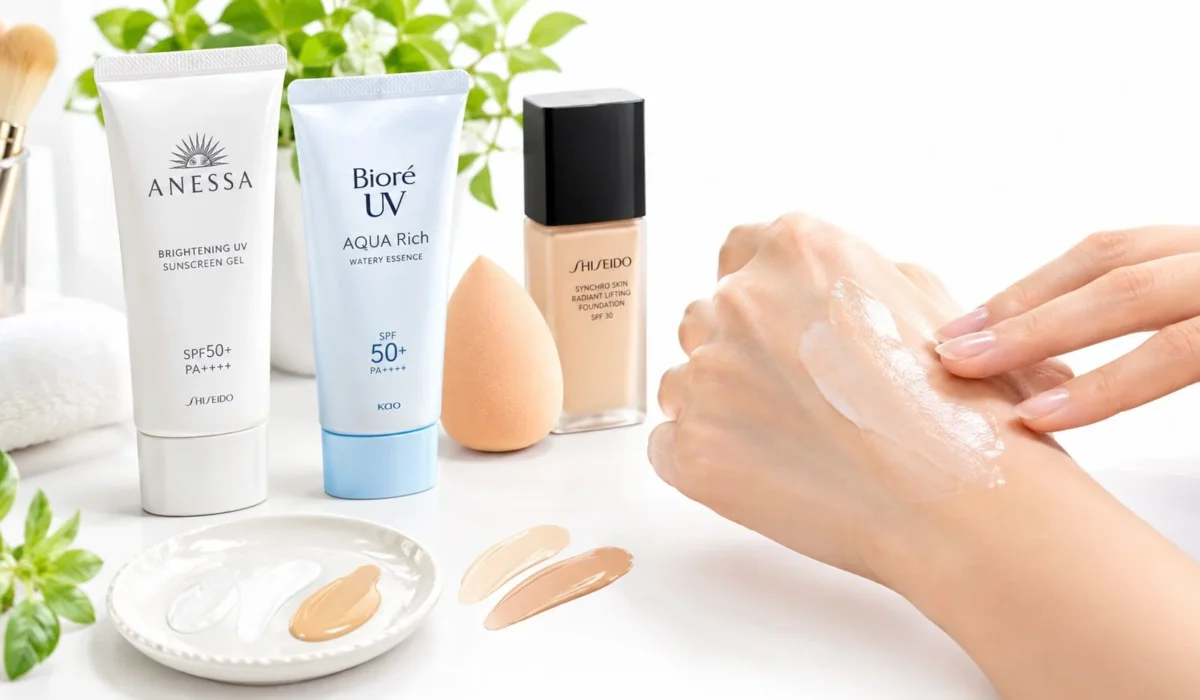
Wearing sunscreen under makeup is one of the most important steps in a daytime beauty routine. It helps protect your skin from harmful ultraviolet rays while allowing you to enjoy your favorite foundation, concealer, and other makeup products.
However, applying sunscreen before makeup can sometimes feel confusing, especially if you are new to skincare. You may wonder which sunscreen works best under foundation, how much to apply, whether you need to wait before applying makeup, and how to prevent your makeup from looking greasy or separating.
The good news is that wearing sunscreen under makeup does not need to be complicated. With the right products and a few simple techniques, you can create a comfortable skincare and makeup routine that works for your skin type.
You do not need expensive products or a complicated beauty routine. The key is choosing a suitable sunscreen, applying enough of it, and allowing your skincare products to settle before adding makeup.
In this beginner-friendly guide, you will learn how to apply sunscreen under makeup, choose the right formula, avoid common mistakes, and maintain sun protection throughout the day.
Why Sunscreen Is Important Under Makeup
Sunscreen helps protect your skin from ultraviolet radiation. Regular sun exposure can contribute to sunburn, premature skin aging, uneven pigmentation, and skin cancer.
Even if you wear foundation every day, makeup should not replace sunscreen unless the product is specifically formulated and labeled as sunscreen and you apply it according to its instructions.
Most people do not apply enough foundation to provide the level of sun protection they expect. Makeup can also leave areas of skin uncovered.
That is why applying sunscreen before makeup is an important step.
A broad-spectrum sunscreen with SPF 30 or higher is a practical choice for everyday use. Broad-spectrum protection helps protect against both UVA and UVB rays.
UVA rays contribute to premature skin aging, while UVB rays are a major cause of sunburn.
Sunscreen is especially important when spending time outdoors. However, it can also be useful during everyday activities, including walking, shopping, commuting, and sitting near windows.
The most important thing is to choose a sunscreen you enjoy wearing regularly.
Step 1: Start With Clean and Moisturized Skin
Before applying sunscreen, prepare your skin with a simple skincare routine.
Start by washing your face with a gentle cleanser that suits your skin type. This helps remove excess oil, sweat, and other impurities.
If your skin feels comfortable after cleansing, you can move directly to moisturizer or sunscreen, depending on your needs.
If your skin is dry, apply a suitable moisturizer before sunscreen. A lightweight gel moisturizer may work well for oily skin, while a cream moisturizer may feel more comfortable on dry skin.
Allow your moisturizer to settle before applying sunscreen.
You do not need to use several skincare products before makeup. Applying too many layers can sometimes make your skin feel heavy or cause products to separate.
For beginners, a simple routine is often easier to maintain.
Practical tip: If your sunscreen already provides enough moisture for your skin, you may not need a separate moisturizer in the morning. However, sunscreen should still be applied generously and evenly.
Step 2: Choose the Right Sunscreen for Your Skin Type
Choosing the right sunscreen can make a big difference in how your makeup looks throughout the day.
Different sunscreen formulas have different textures and finishes. Some feel lightweight and natural, while others provide a more moisturizing or dewy appearance.
The best option depends on your skin type, personal preference, and the makeup products you use.
Sunscreen for oily skin
If your skin becomes shiny throughout the day, you may prefer a lightweight sunscreen with a natural or soft-matte finish.
Gel, fluid, or lightweight lotion formulas can feel comfortable under makeup.
Look for products that do not leave your skin feeling excessively greasy. However, remember that even oily skin needs hydration and sun protection.
Sunscreen for dry skin
If your skin feels tight or flaky, a moisturizing sunscreen may be more comfortable.
Cream-based formulas can help provide a softer finish and may work well under lightweight foundation.
You can also apply a suitable moisturizer before sunscreen if your skin needs additional hydration.
Sunscreen for combination skin
Combination skin may be oily in some areas and dry in others.
A lightweight lotion sunscreen can be a practical starting point. You can adjust your moisturizer depending on which areas of your face feel dry.
Sunscreen for sensitive skin
If your skin is sensitive, look for sunscreen formulas designed for sensitive skin.
Some people prefer mineral sunscreens containing zinc oxide or titanium dioxide. Others tolerate chemical sunscreen filters comfortably.
Neither type is automatically best for everyone. The most suitable sunscreen is one that provides appropriate protection and does not irritate your skin.
Practical tip: Test a sunscreen before wearing it for a full day. Pay attention to how it feels after application and whether it works well with your usual makeup.
Step 3: Apply the Correct Amount of Sunscreen
One of the most common sunscreen mistakes is applying too little product.
A thin layer may not provide the protection indicated on the packaging.
For your face, use enough sunscreen to cover all exposed areas evenly. Many people use the two-finger method as a rough guide, but the amount needed can vary depending on the size of your face and the product’s texture.
Do not forget areas such as your forehead, cheeks, nose, chin, and the sides of your face.
Apply sunscreen to your neck and other exposed skin as well.
Instead of rubbing the product aggressively, spread it gently and evenly.
Pay attention to areas that are easy to miss, including around the hairline and ears.
If you wear makeup, allow the sunscreen to form an even layer before applying foundation.
Practical tip: Follow the sunscreen’s application instructions and do not reduce the amount simply because you want your makeup to look lighter.
If you use a sunscreen with a thick texture, apply it carefully in sections to help distribute it evenly.
Step 4: Wait Before Applying Makeup
After applying sunscreen, give it time to settle before applying foundation or concealer.
Many people find that waiting around 10 to 15 minutes helps their sunscreen feel more comfortable under makeup. However, the exact time depends on the product, and you should follow its instructions.
This short waiting period can help reduce the chance of disturbing the sunscreen layer while blending makeup.
If you apply foundation immediately and rub it aggressively, the sunscreen underneath may move around.
Once your sunscreen feels settled, you can continue with your makeup routine.
You do not need to touch your face repeatedly to check whether it is dry. Simply give the product time to settle naturally.
Practical tip: Use the waiting time to prepare your makeup products, brush your eyebrows, or choose your lip color.
If your sunscreen remains very sticky or feels uncomfortable, you may want to try a different formula that works better with your skin type.
Step 5: Apply Primer Only If You Need It
Primer is an optional step when wearing sunscreen under makeup.
Some people enjoy using primer because it can help create a smoother surface for foundation. Others find that their sunscreen already provides a comfortable base.
You do not need to purchase a primer just because you wear makeup.
If your foundation applies smoothly over sunscreen, you can skip it.
If you want to use primer, choose a formula that works well with both your sunscreen and foundation.
For example, a lightweight hydrating primer may suit dry skin, while a soft-matte primer may be preferred by people who experience excess shine.
Apply a small amount of primer after your sunscreen has settled.
Avoid rubbing several layers of products together too aggressively. This can sometimes cause pilling, which happens when products form small rolls or flakes on the skin.
Practical tip: Test your sunscreen, primer, and foundation together before using them for an important event.
If the products separate, try changing the application technique or removing an unnecessary layer.
Step 6: Apply Foundation Gently
Once your sunscreen has settled, you can apply foundation.
For a natural everyday look, lightweight foundation or skin tint can be a comfortable choice.
Apply a small amount to the center of your face and blend outward.
Use gentle tapping or pressing motions rather than rubbing the foundation aggressively across your skin.
A damp makeup sponge can help distribute foundation in a thin layer. A soft brush or clean fingers may also work well, depending on the product.
If you need more coverage, build it gradually.
You do not need to cover every mark or natural skin feature to create a polished appearance.
The goal is to apply makeup without unnecessarily disturbing the sunscreen underneath.
Practical tip: If your foundation looks patchy, avoid immediately adding more product. First, check whether your skin is adequately moisturized and whether your sunscreen has settled.
Sometimes using less foundation and blending gently can create a smoother finish.
Step 7: Use Concealer and Powder Carefully
Concealer can provide additional coverage under your eyes or around areas where you want to reduce the appearance of redness.
Apply a small amount and blend gently.
Avoid rubbing the product repeatedly over the same area because this may disturb the sunscreen underneath.
If your skin becomes oily during the day, you can use a small amount of translucent powder.
Apply powder mainly to areas where you experience excess shine, such as the forehead, nose, or chin.
If your skin is dry, you may prefer to use little or no powder.
Too much powder can make makeup look heavy and emphasize dry patches.
You can also use a setting spray if you enjoy the finish it provides. However, setting spray does not replace sunscreen.
Practical tip: Keep your makeup layers light. Applying several thick products over sunscreen may make your face feel uncomfortable and increase the chance of makeup separating.
Step 8: Reapply Sunscreen During the Day
Applying sunscreen in the morning is important, but sun protection does not necessarily last all day.
Sunscreen should generally be reapplied about every two hours when you are outdoors. You should also reapply after swimming, sweating, or towel drying, following the product instructions.
Reapplication can feel difficult when you are wearing makeup, but there are several practical options.
One option is to gently remove or adjust your makeup and apply your regular sunscreen again.
Some people use sunscreen sticks or powder sunscreens for convenience. However, these products may not provide adequate protection if they are applied too lightly.
For reliable protection, use a sufficient amount of sunscreen according to its instructions.
If you spend most of your day indoors, your sunscreen needs may differ depending on your exposure to sunlight. Pay particular attention to outdoor activities and direct sunlight near windows.
Practical tip: Carry your regular sunscreen with you when you expect to spend extended time outdoors.
Do not depend entirely on makeup with SPF or a small amount of powder sunscreen for reapplication.
Common Mistakes to Avoid
Wearing sunscreen under makeup becomes easier when you understand a few common mistakes.
One mistake is applying too little sunscreen. A thin layer may not provide the expected level of protection.
Another mistake is applying makeup immediately and rubbing the sunscreen aggressively. Allowing sunscreen to settle and using gentle application techniques can help.
Choosing a sunscreen that does not suit your skin type can also make your makeup feel uncomfortable. If a product repeatedly causes irritation or separation, consider trying another formula.
Some people skip sunscreen on cloudy days. However, ultraviolet radiation can still reach your skin when the sky is cloudy.
Another common mistake is assuming foundation with SPF provides enough protection on its own. Most people do not apply enough foundation to achieve the labeled SPF.
Finally, avoid using sunscreen only when you plan to spend a long time outside. Daily sun protection can be useful during ordinary activities as well.
Frequently Asked Questions
Can I apply sunscreen directly under foundation?
Yes. Apply sunscreen after your morning skincare routine and before foundation. Allow it to settle according to the product instructions before applying makeup.
How long should I wait before applying makeup?
Many people find that waiting around 10 to 15 minutes helps sunscreen settle. However, the exact time depends on the product, so follow its instructions.
Can I use moisturizer and sunscreen together?
Yes. Apply moisturizer first if your skin needs it, followed by sunscreen. If your sunscreen provides enough moisture, you may not need a separate moisturizer.
Is sunscreen with SPF 50 better under makeup?
SPF 50 provides a higher labeled level of UVB protection than SPF 30 when both are applied correctly. However, comfortable wear and regular application are also important.
Can I skip sunscreen if my foundation has SPF?
It is better not to rely on foundation alone. Apply a separate broad-spectrum sunscreen before makeup and use foundation with SPF as an additional layer if desired.
How can I stop sunscreen from making my makeup greasy?
Choose a sunscreen with a finish that suits your skin type. Apply the recommended amount, allow it to settle, and use lightweight makeup products.
Final Thoughts
Wearing sunscreen under makeup is a simple way to combine skincare and beauty in your daily routine. The most important steps are choosing a suitable sunscreen, applying enough product, and allowing it to settle before adding makeup.
Start with clean and moisturized skin. Apply sunscreen evenly, wait before using foundation, and blend your makeup gently.
If your makeup looks greasy or begins to separate, consider changing the sunscreen formula or simplifying your skincare layers.
Remember that sunscreen is not just another beauty product. It plays an important role in protecting your skin from ultraviolet radiation.
With the right products and a consistent routine, you can enjoy comfortable makeup while supporting healthier-looking skin every day.